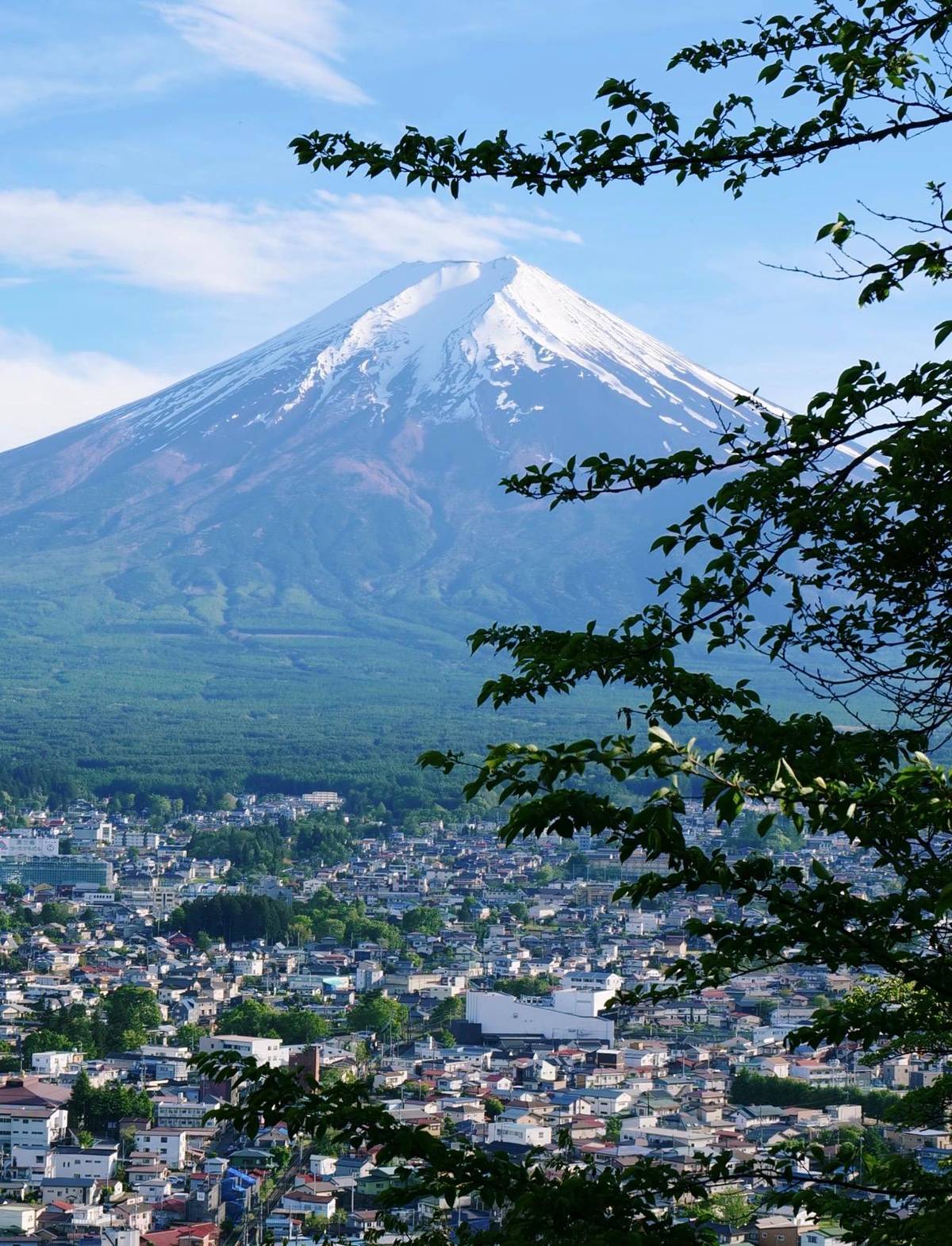
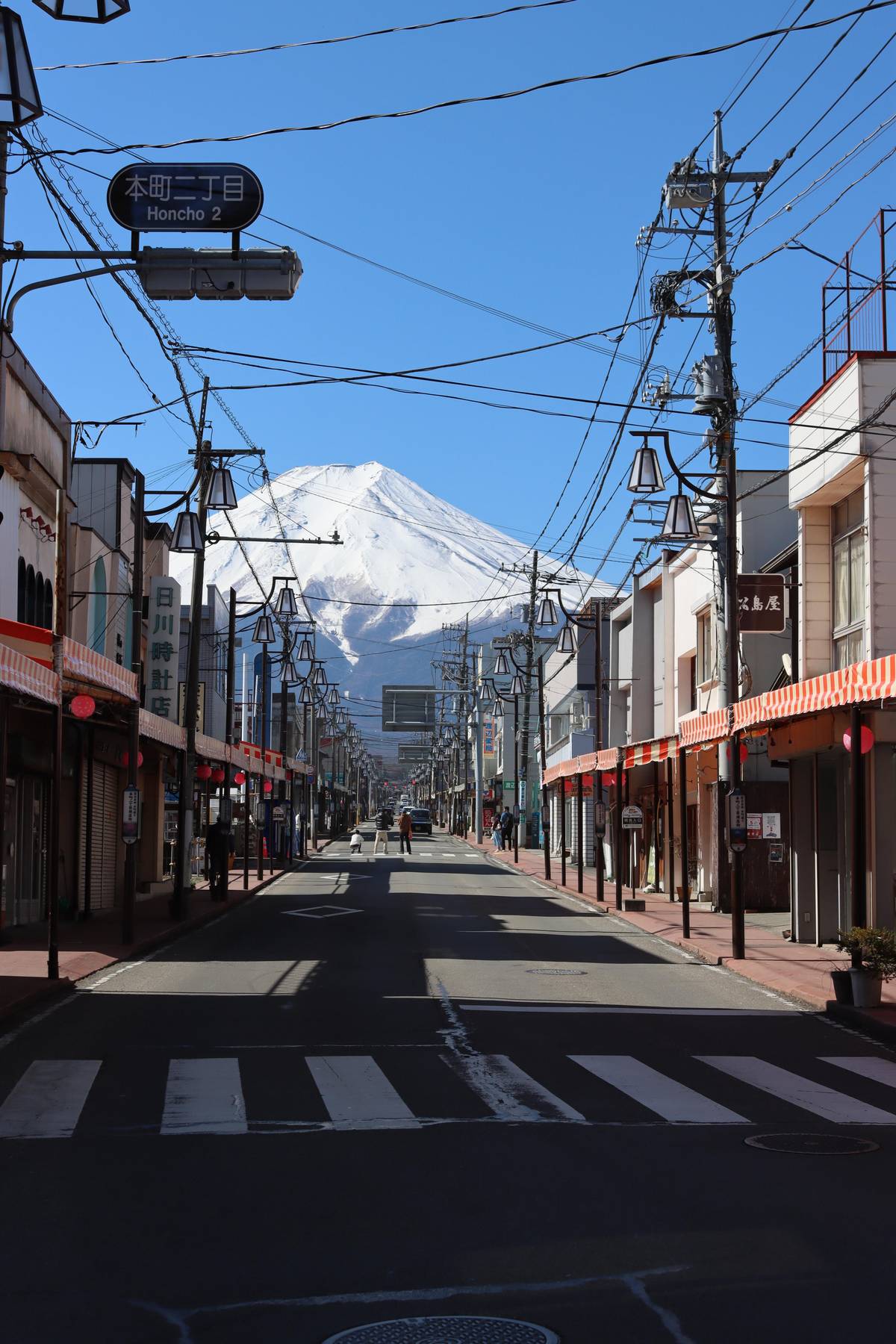
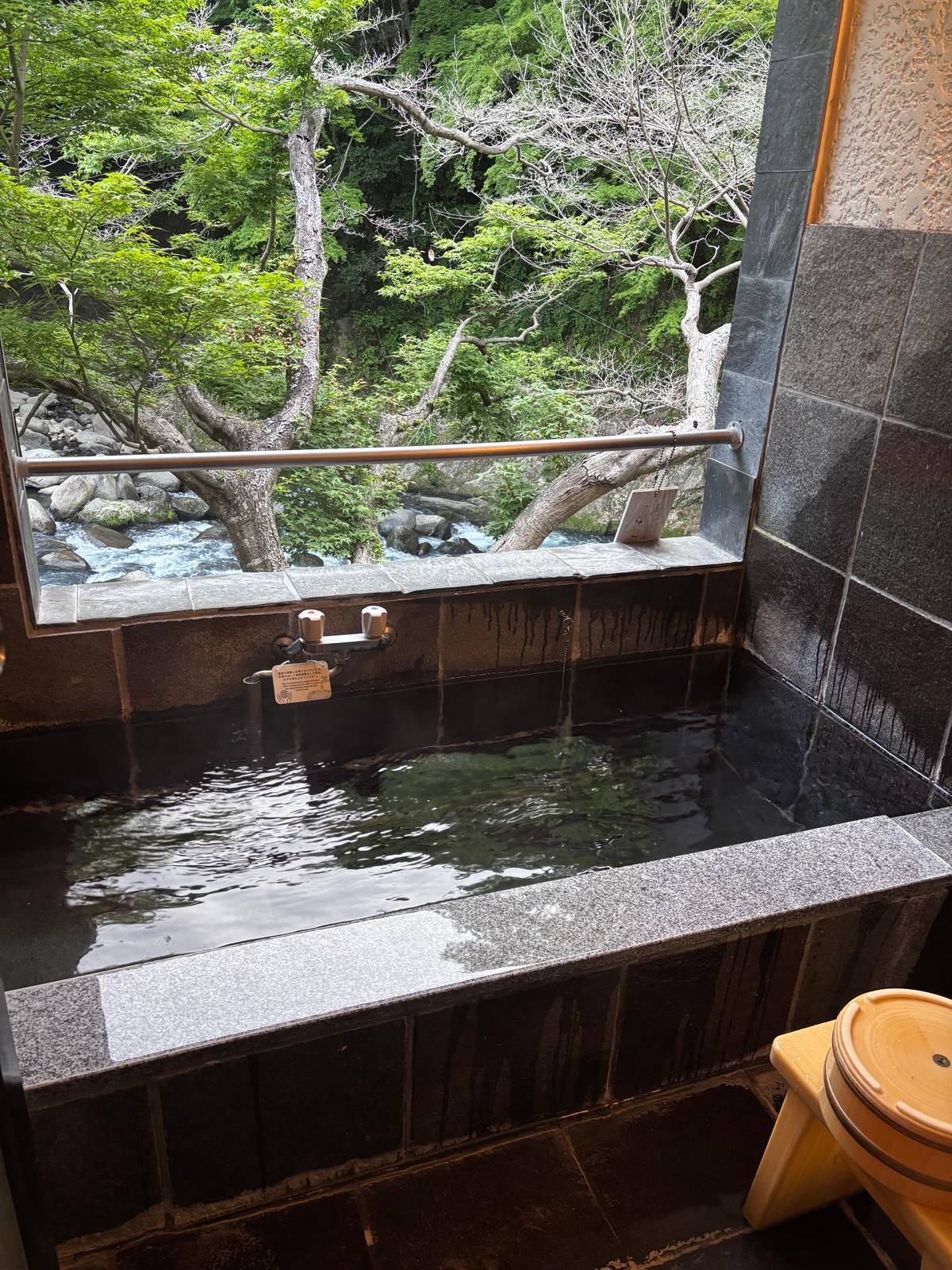
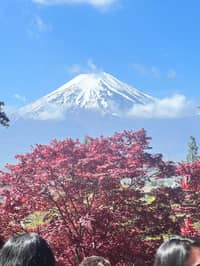
 Clearest views
Winter
December to March
- January sun
- 212.3 hours
- January low
- -5.7 °C
- Highlight
- Red Fuji at dawn
Guides
Language
EnglishCurrency
US dollar · $Your currency applies on GetYourGuide too.
Guide · Best season
A hot bath feels best in cold air, and Kawaguchiko onsen in winter adds the clearest views of the year. Here is how each season changes the baths, the mountain, our day trip and what you should pack.
Editorial team, mountfujionsen.comUpdated October 23, 2026read in 6 minutes19 sources
Season by season
Hot water and cold air are the classic combination, and the north side of Mount Fuji supplies plenty of both. The Japan Meteorological Agency's Kawaguchiko observatory, on the north shore of the lake, records average daily lows below freezing from December to March, with January the coldest at -5.7 °C.2 Stepping from that air into an open-air bath is the moment the whole trip is built around. The contrast is sharpest in the open-air tubs, where steam rises off the water and your shoulders feel the frost while the rest of you stays warm.
Winter is also when the mountain shows itself most often. January brings 212.3 sunny hours on average at the observatory, December 199.9, and rainy June only 122.8.156 Clear air means a sharp outline of the snow cap from the bath, and fewer days lost to cloud.
The trade-offs are real. Winter days are short, with about 10 hours of daylight at mid-January by our calculation, and snow can fall: the observatory averages 37 cm of snowfall in January and 28 cm in February.217 Pack warm layers, plan your soak for daylight, and accept that some roads are slower in the morning.
The year
October
Its first slope opens each October.8
Mid-December
The north-side resort's planned opening.9
December to March
Benifuji no Yu opens at 6:00 on weekends.4
1 Dec to 25 Apr
The Fifth Station roads are closed by snow.
Early June
The day bath closes for a few days.10
July to 10 September
Summit trails open in summer only.11
The most famous winter sight from a bath near the mountain is the red Fuji, the snow cap glowing pink in the first light. Benifuji no Yu at Lake Yamanaka is named for it, and on weekends and holidays from December to March it opens at 6:00 so that bathers can see it.4 Yamanashi's official guide says Mount Fuji can be seen from all of its baths.12
At Lake Kawaguchi the inns open their baths early too. Ubuya reopens its baths from 5:00 in the morning, and Konansou's public baths open at 5:00.1314 A soak at dawn, with the mountain catching the light and the lake still, is reason enough to book a night rather than a day trip in winter.
Dress for the walk between the changing room and the open-air bath. The water is hot, but the air at sunrise is the coldest of the day, and a wet head in freezing wind is unpleasant. Keep a hat for the walk back to your room and dry your hair well before going outside. A thermos of tea for the drive and a scarf for the evening make the cold part of the day easier.
Month by month
Climate
| Month | Daylight (h) | Darkness (h) | High / low | Wet days | Red Fuji baths |
|---|---|---|---|---|---|
| Jan | 10 | 14 | 6 / -6 °C | 5 | Benifuji 6:00 weekends |
| Feb | 10.9 | 13.1 | 7 / -5 °C | 5 | Benifuji 6:00 weekends |
| Mar | 11.9 | 12.1 | 11 / -1 °C | 9 | Benifuji 6:00 weekends |
| Apr | 13.1 | 10.9 | 16 / 4 °C | 9 | Usual bath hours |
| May | 14 | 10 | 21 / 9 °C | 9 | Usual bath hours |
| Jun | 14.5 | 9.5 | 23 / 14 °C | 12 | Usual bath hours |
| Jul | 14.3 | 9.7 | 27 / 18 °C | 12 | Usual bath hours |
| Aug | 13.5 | 10.5 | 28 / 19 °C | 10 | Usual bath hours |
| Sep | 12.5 | 11.5 | 24 / 15 °C | 11 | Usual bath hours |
| Oct | 11.4 | 12.6 | 18 / 9 °C | 10 | Usual bath hours |
| Nov | 10.3 | 13.7 | 14 / 2 °C | 7 | Usual bath hours |
| Dec | 9.8 | 14.2 | 9 / -3 °C | 5 | Benifuji 6:00 weekends |
Highs, lows and days with 1 mm of rain or more come from the Japan Meteorological Agency's Kawaguchiko observatory, 1991 to 2020; the hours of daylight at mid-month are worked out by us from the latitude.2 Season according to Yamanashi Prefecture Tourism.4
Three seasons
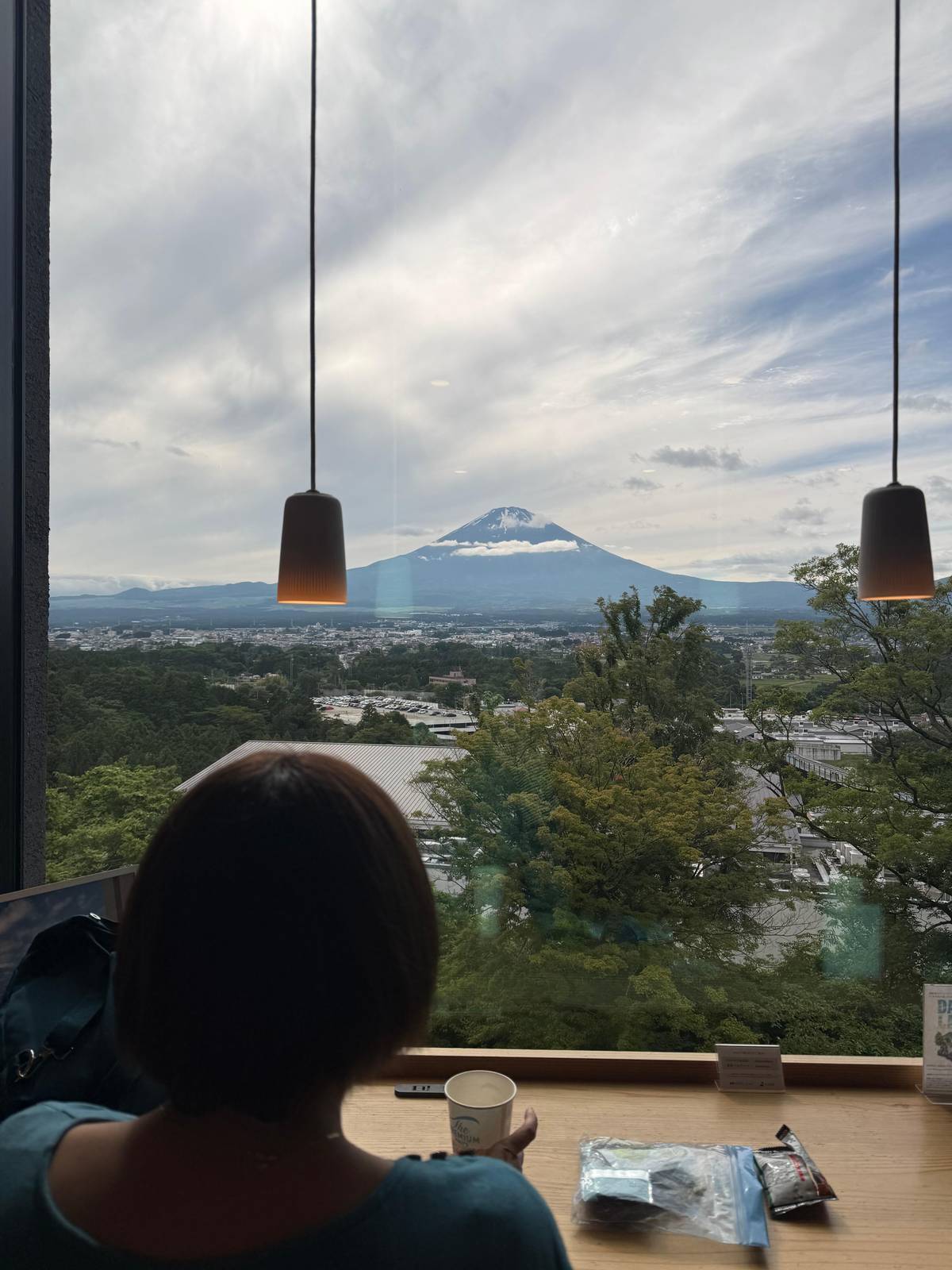
Clearest viewsDecember to March
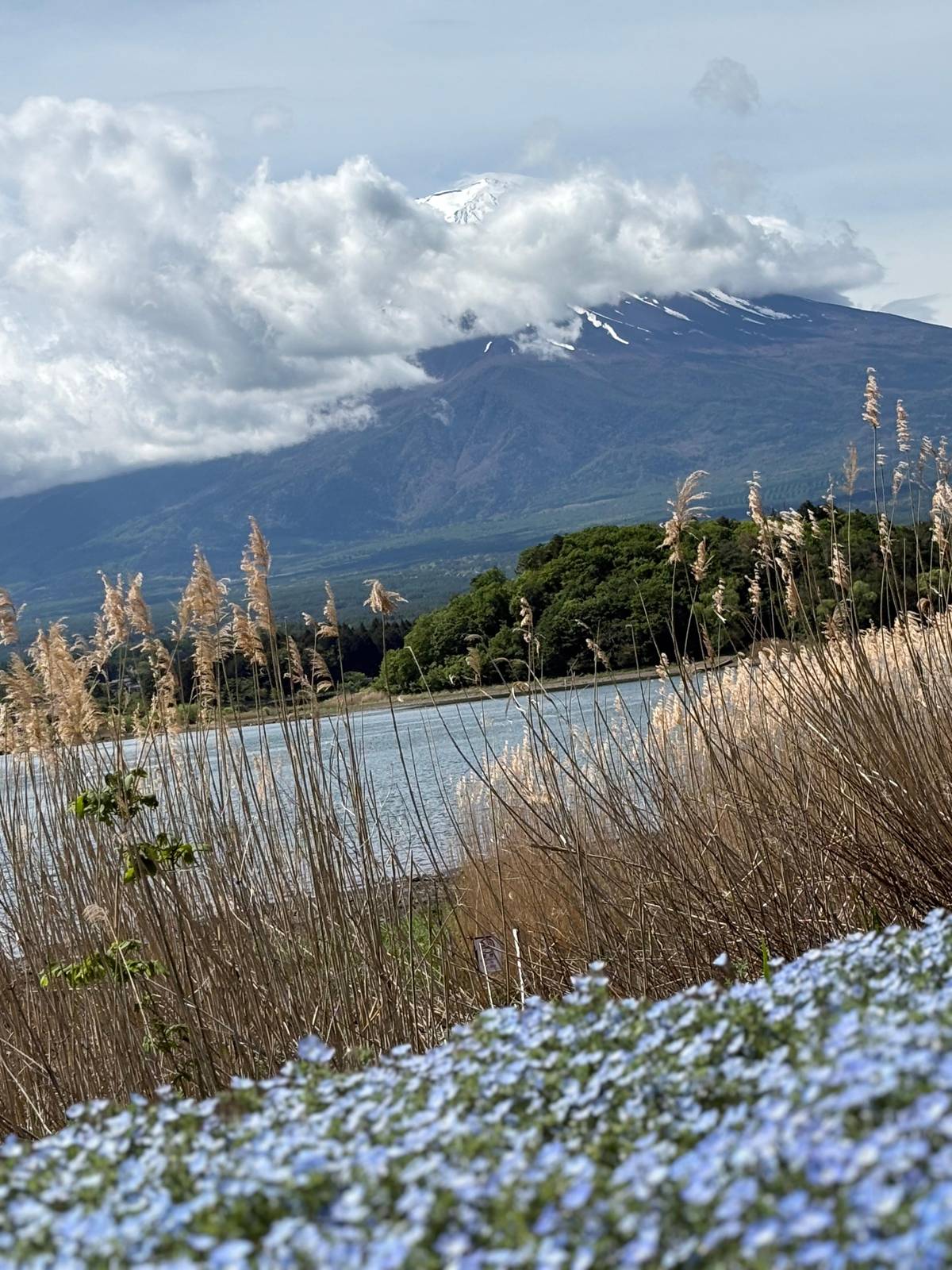 Climb and soak
July and August
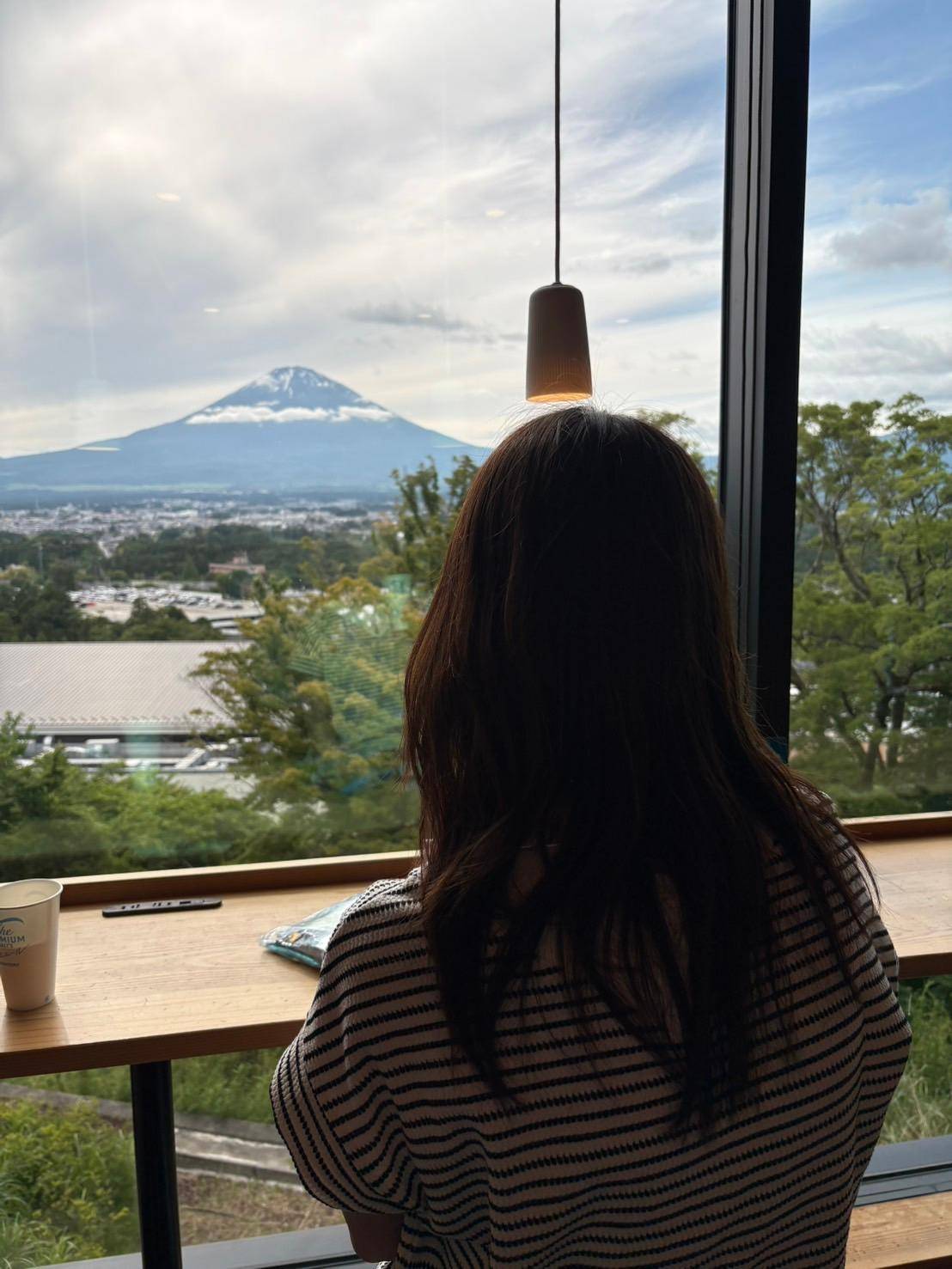 Color and snow
Decision helper
Pick what matters most to you
The lake sees 212.3 sunny hours that month on average.1
Benifuji no Yu opens at 6:00 on those days for it.4
The summit trails are open only in the summer season.11
The tour visits Arakura Sengen Park the rest of the year.
Yeti's first slope opens each year in October.8
Spring warms quickly at the lake. Average highs at Kawaguchiko rise from 10.5 °C in March to 20.6 °C in May, while lows climb above freezing in April.2 Spring evenings stay cool enough that the open-air bath still feels like a treat. Plan a dawn soak in spring too: the light on the mountain is soft and the lake can be still in the first hour.
Our day trip changes in spring. From 1 December to 25 April the roads to the Fifth Station are closed by snow and the tour visits Arakura Sengen Park with the Chureito Pagoda instead; from 26 April it goes up to the Fifth Station. Either way it ends with the same choice of a hot spring or the outlets.
June is the rainy month. Sunshine at Kawaguchiko drops to 122.8 hours on average, and the mountain hides behind cloud for days at a time.6 Yurari also closes for maintenance in early June, so check its notices before you plan around it.10
Checklist
Video
The player loads on your tap, not before.
July and August are the warmest months, with average highs of 27.2 °C and 28.1 °C at the lake, and also some of the wettest.2 Summer days are long, with more than 14 hours of daylight at mid-July by our calculation, so an evening soak with the mountain in view is possible after a full day out.2 Bring a light layer even in August: lows at the lake average 18.5 °C that month.2
Summer is also the climbing season. In 2026 the summit trails opened on 1 July or 10 July, depending on the trail, and closed on 10 September.11 A soak after the descent is one of the best baths of the year; two guided 2-day climbs from Tokyo include a hot spring at the end.
Rain peaks in September, when the lake collects 264.7 mm in an average year.3 Keep plans flexible and pack a light rain layer for the walks between baths, restaurants and the coach.
Autumn is a fine compromise. Highs fall from 23.8 °C in September to 13.8 °C in November, and lows drop close to freezing by the end of the season.2 The air clears after the September rains, and the first snow appears on the summit.
The maple colors are a big draw around the lakes. One coach day from Tokyo even changes its route for them: from about 30 October to 25 November it visits the Kawaguchiko maple corridor instead of Oishi Park. Book your room early if you want those weeks. A soak after a walk among the colored trees is one of the quieter pleasures of the year.
Autumn also opens the snow season early. Yeti, the ski resort on the mountain's Second Station, opens its first slope in October each year.8 Fujiten, on the north side, plans to open in mid-December.9
Baths and inns close for maintenance at fixed points in the year. Yurari closes in early June and in December, and posts the exact dates on its website.10 Fuji Hakkei no Yu closes on the second and fourth Thursday of each month, unless that day is a holiday.15 Read the notices page of any bath on your list the week before you travel.
Some inns close for a few days in winter. Konansou, for example, closes from 7 to 11 December 2026 and from 25 to 27 January 2027.16 And Fujiyama Onsen in Fujiyoshida has been closed since June with no reopening date, whatever the season.17
From 1 April 2027, any stay in Fujikawaguchiko carries an accommodation tax of 200 yen per person per night.18 It applies all year, but it is worth knowing if you are planning a spring trip around that date.
For the onsen alone, choose January or February: the coldest air, the clearest skies and the red Fuji at dawn on weekends at Benifuji no Yu.14 Book a lakeside room that faces the mountain and set an early alarm. If you can only travel on a weekend, book well ahead, since rooms that face the mountain are limited; Konansou, for one, has 10.19
For a mix of sightseeing and bathing, late October and November work well: colors around the lakes, the first snow on the summit, mild days and fewer rainy days than September.23 The day trip still goes to the Fifth Station until 30 November. Pack for both warm afternoons and cold evenings at that time of year.
For a climb with a soak at the end, it has to be July or August, inside the official season.11 And whatever the month, check the forecast the day before: the tour's listing reminds you that visibility depends on the weather.
Your Fuji day
Pick a date, meet at Tokyo Station or in Shinjuku, and cancel free of charge right up to 24 hours before.
January and February. January, the coldest month, brings 212.3 sunny hours to Kawaguchiko, ideal for a hot bath.12
Below freezing at night in winter. The January average low at the Kawaguchiko observatory is -5.7 °C.2
December to March, at dawn. Benifuji no Yu opens at 6:00 on weekends and holidays in those months.4
No, Arakura instead. From 1 December to 25 April the tour visits Arakura Sengen Park because the roads are closed.
September. Kawaguchiko averages 264.7 mm of rain in September, more than any other month.3
Some. The observatory averages 37 cm of snowfall in January and 28 cm in February.17
Early June and December. The bath closes for maintenance then and posts the dates on its site.10
Sources
Keep reading